
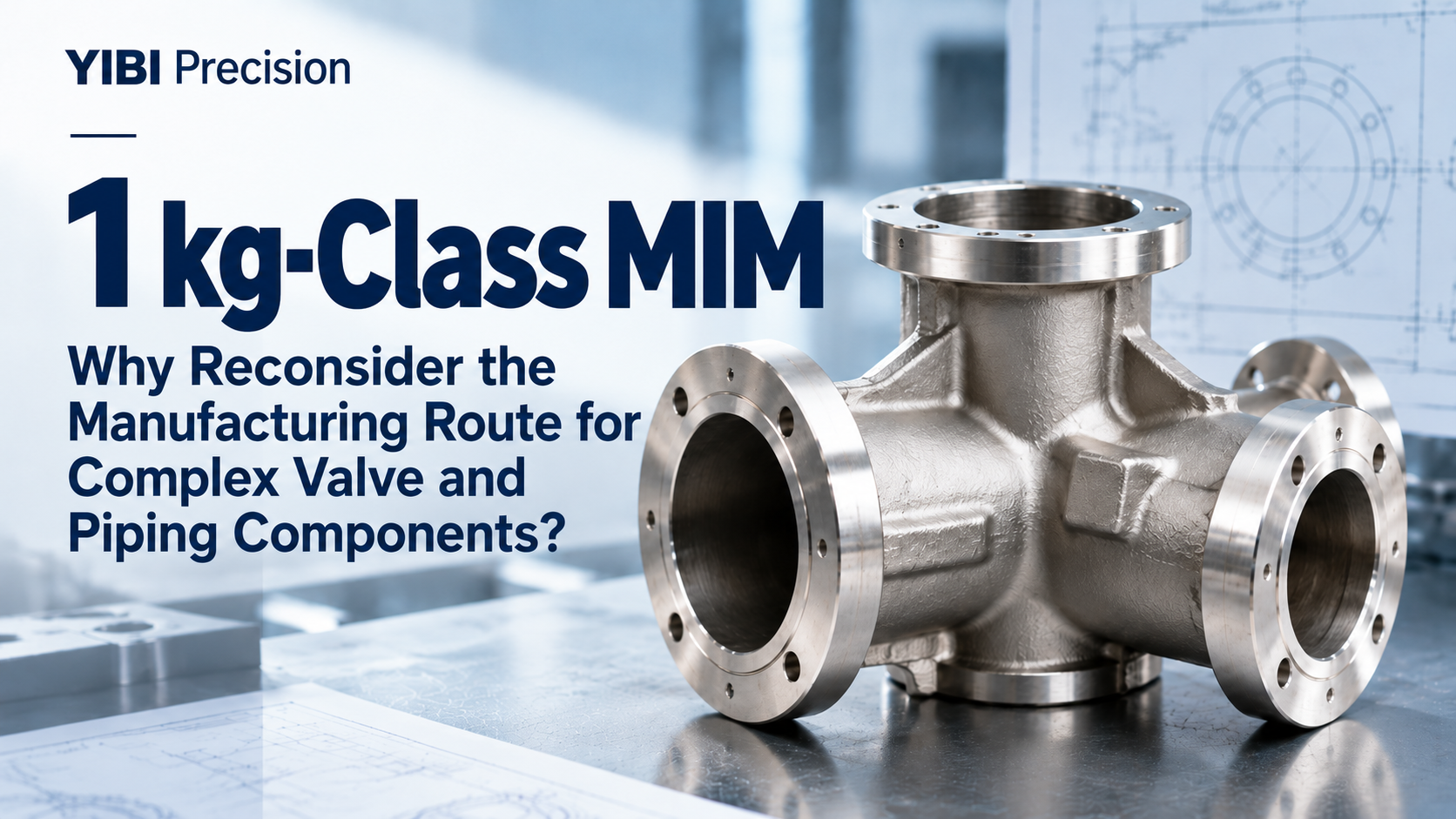
From conventional casting to Metal Injection Molding: Rethinking how complex fluid-control components are manufactured.
Yibi Precision has developed the capability to manufacture large MIM components in the 1 kg range.
For complex valve and piping components that still require multiple machining operations after investment casting, this opens up another manufacturing option: forming selected complex features directly in the mold, reducing secondary machining and creating opportunities to lower overall production costs.
But what makes these components challenging to manufacture? How does MIM change the process, and what can customers gain?
01 | Understanding the Complexity of Valve Components
Valve bodies and piping components are widely used in water supply, heating, industrial fluid control, fire protection and chemical processing systems.
A multi-port valve body may combine several functions in one metal component. Ports connect different pipelines, internal passages direct fluid flow, mounting features provide positioning, and threads and sealing surfaces ensure reliable connections.
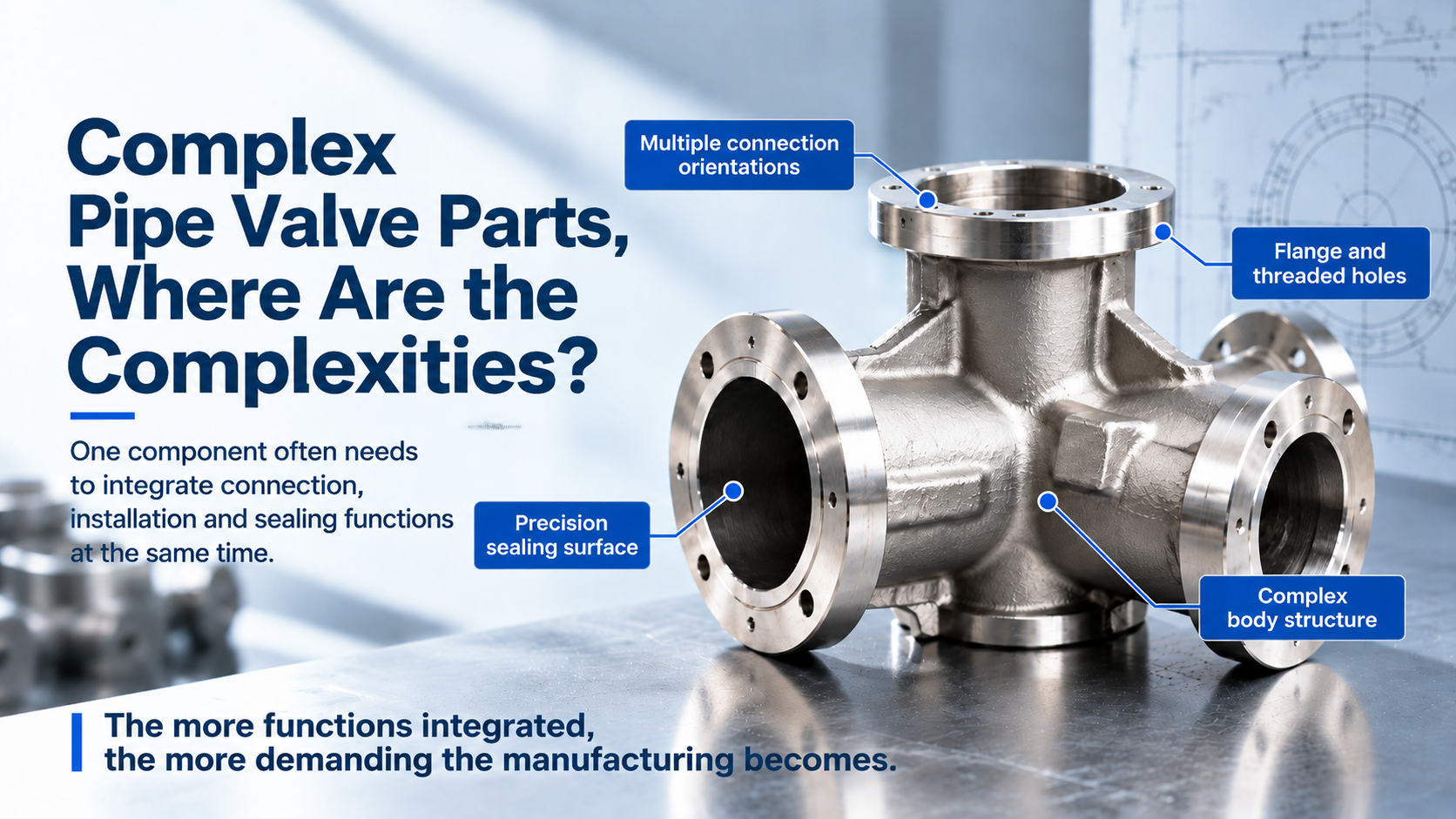
Bringing these features together creates complex geometries and demanding dimensional requirements.
The challenge is to manufacture a component that meets its functional requirements while keeping production costs under control.
02 | Why Reconsider the Traditional Casting Route?
Casting remains one of the most established manufacturing methods in the valve industry. Depending on material, size and operating conditions, common routes include sand casting, investment casting and forging.
Investment casting is particularly suitable for certain complex stainless steel components. It produces near-net-shape parts, reducing the material removal required compared with machining from solid stock.
However, some complex valve bodies still require substantial machining after casting, including drilling, tapping, milling mounting surfaces and finishing sealing interfaces.
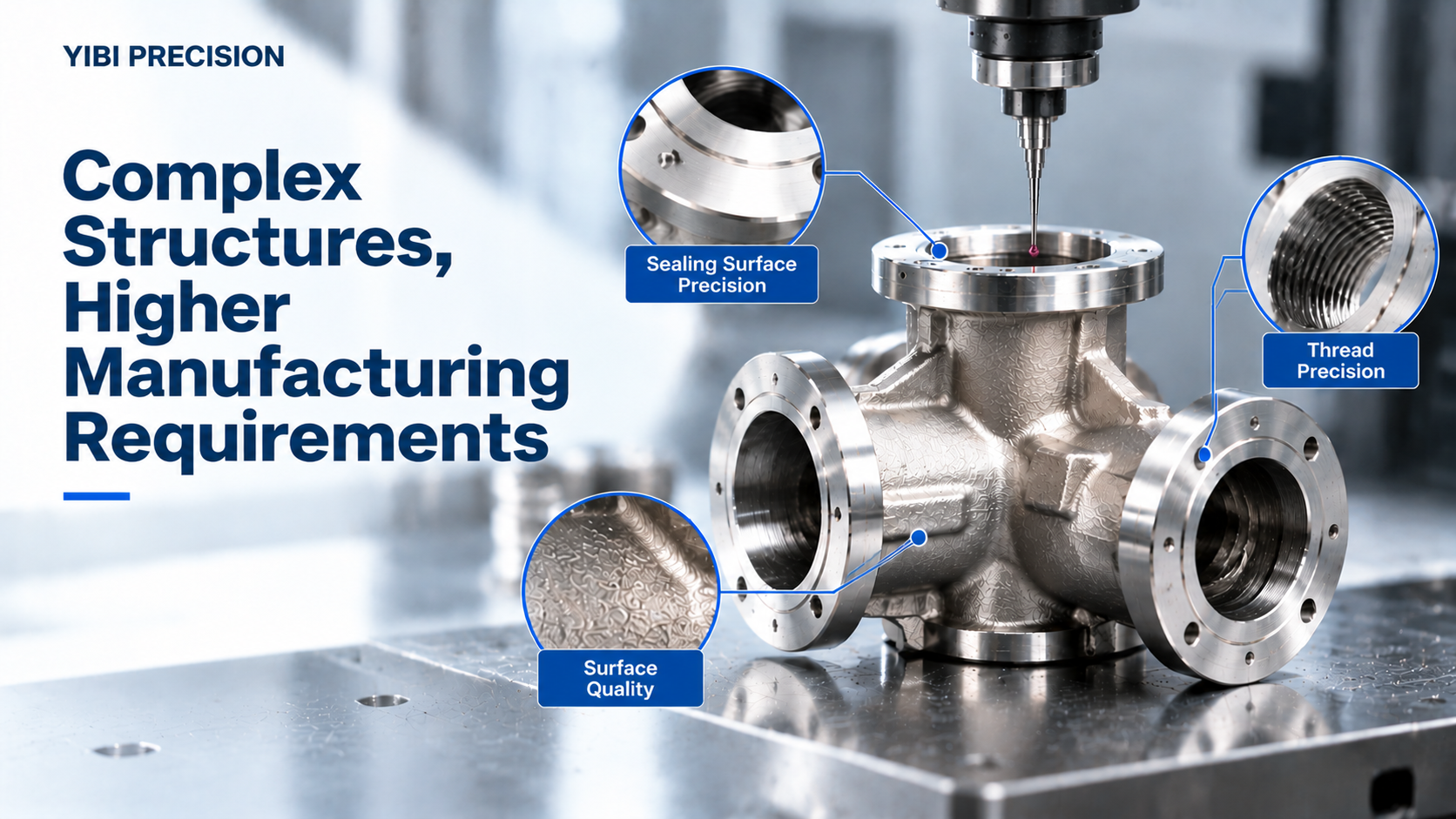
These operations add recurring costs through machine time, cutting tools, workholding and production transfers.
The real opportunity lies in reducing the machining work that remains after casting.
This is where MIM offers another manufacturing option.
03 | What Does MIM Change? Forming Complex Features Directly in the Mold
Metal Injection Molding (MIM) combines powder metallurgy with injection molding technology.
Fine metal powders are mixed with a binder to create feedstock, which is injected into a mold to form a green part. The part then undergoes debinding and sintering to become a metal component.
MIM can incorporate multiple complex features into the molded geometry. Depending on the design and tooling, selected passages, mounting holes, bosses, grooves and contours can be formed directly.
Some intersecting passages and side holes can be produced using core-pulling mechanisms, while precision features may still require secondary machining.
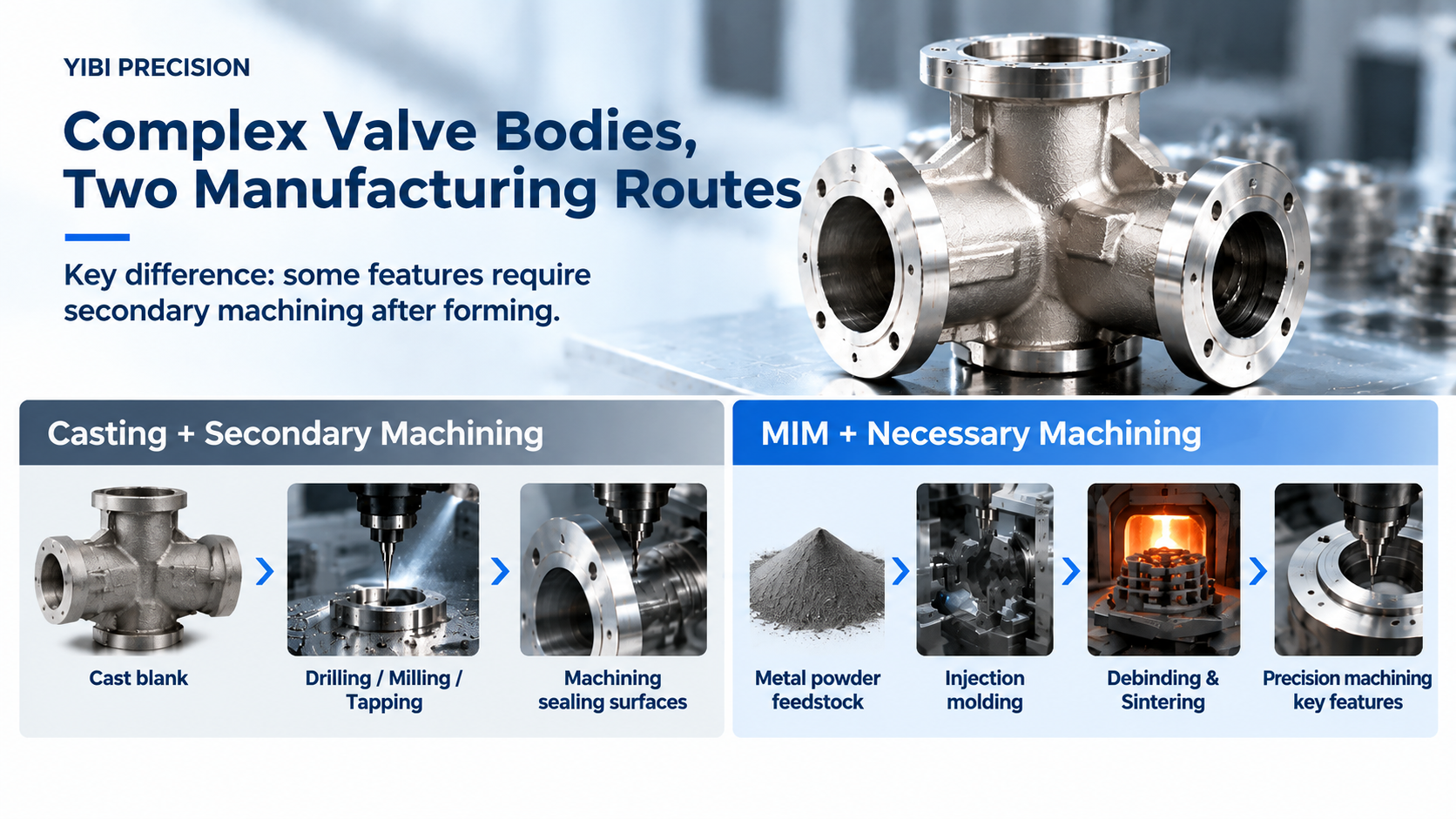
Instead of machining every feature individually, MIM allows more of the geometry to be formed in the mold, leaving machining for the features that genuinely require it.
04 | Why Does 1 kg-Class MIM Require Advanced Engineering Development?
MIM is traditionally associated with small, complex precision components. Developing parts in the 1 kg range requires much more than simply scaling up the mold.
Four stages are particularly important:
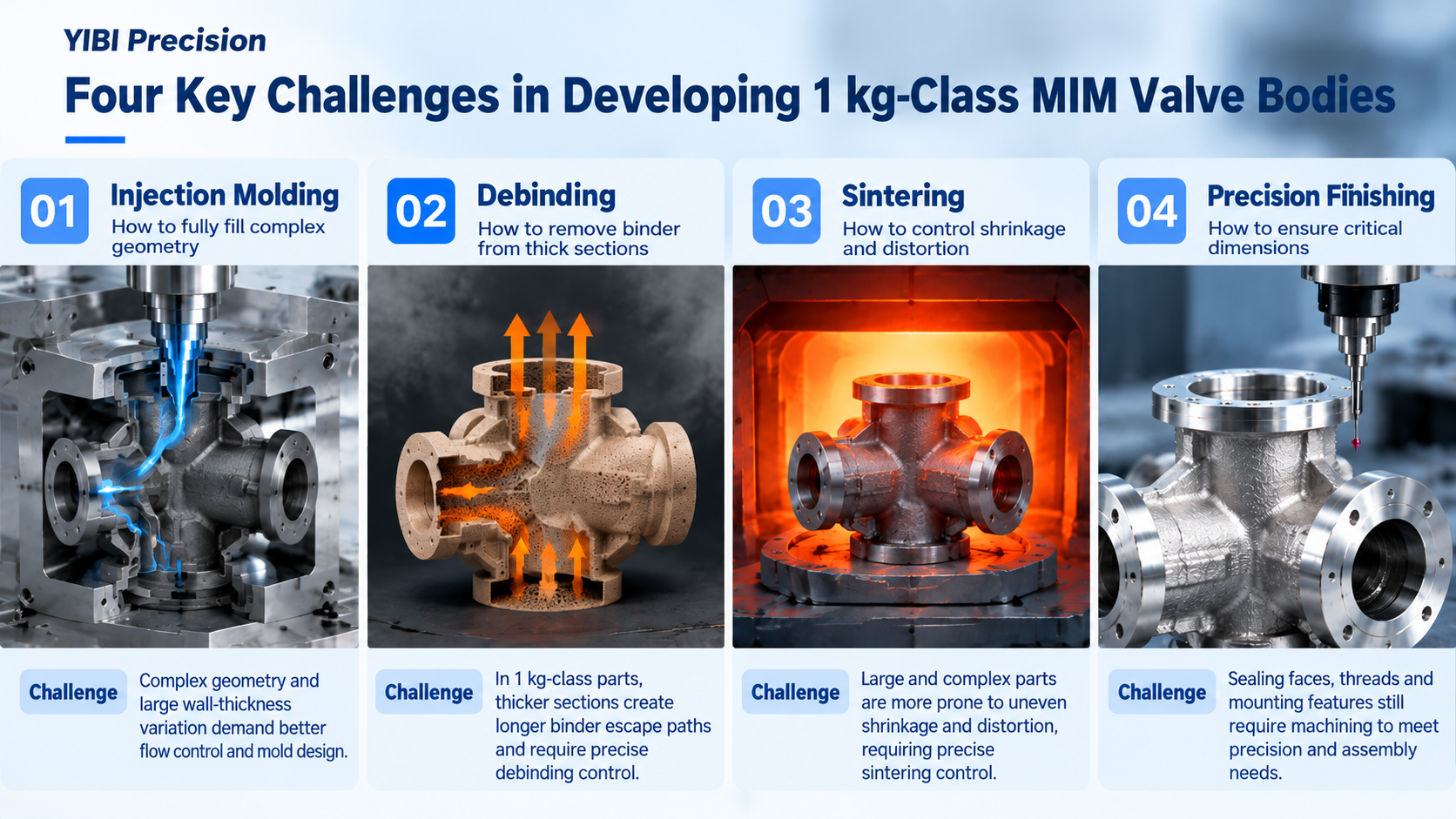
- Injection Molding — Complete Filling
Feedstock flow paths, gate locations and cavity design must be carefully planned to fill larger, complex geometries without defects.
- Debinding — Effective Binder Removal
Thicker sections require particular attention during binder removal. Wall-thickness distribution and debinding conditions must be controlled to reduce internal defects and cracking.
- Sintering — Shrinkage and Distortion Control
Components shrink during sintering. For multi-port valve bodies, maintaining the positional accuracy of interfaces and mounting features is just as important as controlling the overall shape. Mold compensation and sintering support must be developed accordingly.
- Secondary Machining — Final Dimensional Accuracy
Critical threads, sealing surfaces and precision mating features may still require machining. Machining allowances and workholding arrangements need to be planned from the beginning.
The real challenge of 1 kg-class MIM is coordinating complex geometry, material flow, debinding, sintering and final machining within one integrated manufacturing strategy.
05 | What Can Customers Gain from MIM?
For valve manufacturers, the value of MIM lies in improving the manufacturing route, not simply changing the process.
Lower Manufacturing Costs
When holes, grooves or contours can be formed directly in the mold, corresponding cutting operations may be eliminated. This reduces machining time and cutting-tool consumption, while fewer separate operations can also reduce workholding and handling.
Greater Production Capacity
Reducing secondary machining frees up machine capacity. Where machining is already a bottleneck, fewer operations can also reduce production queues and intermediate delays, improving the flexibility of production planning.
More Integrated Component Designs
MIM allows selected complex features to be incorporated into a single component, creating opportunities to reduce machining and multi-part assembly.
Critical threads, sealing surfaces and precision mating features can still receive the necessary finishing. Pressure and sealing performance must be verified against the application’s requirements.
The ultimate goal is a more competitive cost per finished part while maintaining the required product performance.
The full cost evaluation should include tooling, materials, MIM processing, remaining machining and inspection. The economics depend on component design and production volume.
MIM is particularly worth evaluating for complex components with substantial secondary machining requirements and stable production demand.
06 | Start with One Component
Yibi Precision has the capability to manufacture MIM components in the 1 kg range.
For complex valve and piping components, we can review your existing design and manufacturing route to identify opportunities for improvement.
To begin an initial assessment, provide:
Part Design & Material
2D drawings or 3D models, material grade and critical dimensional requirements.
Production Requirements
Estimated annual or batch volume, existing machining operations and current cost or delivery challenges.
Operating Conditions
Working medium, pressure, temperature, sealing and service-life requirements.
Our engineering team can identify which features are suitable for direct molding, which machining operations could be reduced, and which precision operations must remain.
We can then evaluate the complete manufacturing cost, including tooling and development investment, to determine whether MIM is the right production route for your component.
1 kg-class MIM expands the possibilities for complex valve and piping components. The real opportunity is turning that capability into fewer machining operations, more competitive manufacturing costs and more efficient production.