In many MIM projects, cost, quality and production stability are not decided after tooling begins.
They are often decided much earlier — at the design stage.
By the time a part reaches RFQ, sampling or mold development, many key decisions may already have been made. Some of them can support stable production. Others may create unnecessary cost, tolerance challenges, or post-processing risks later.
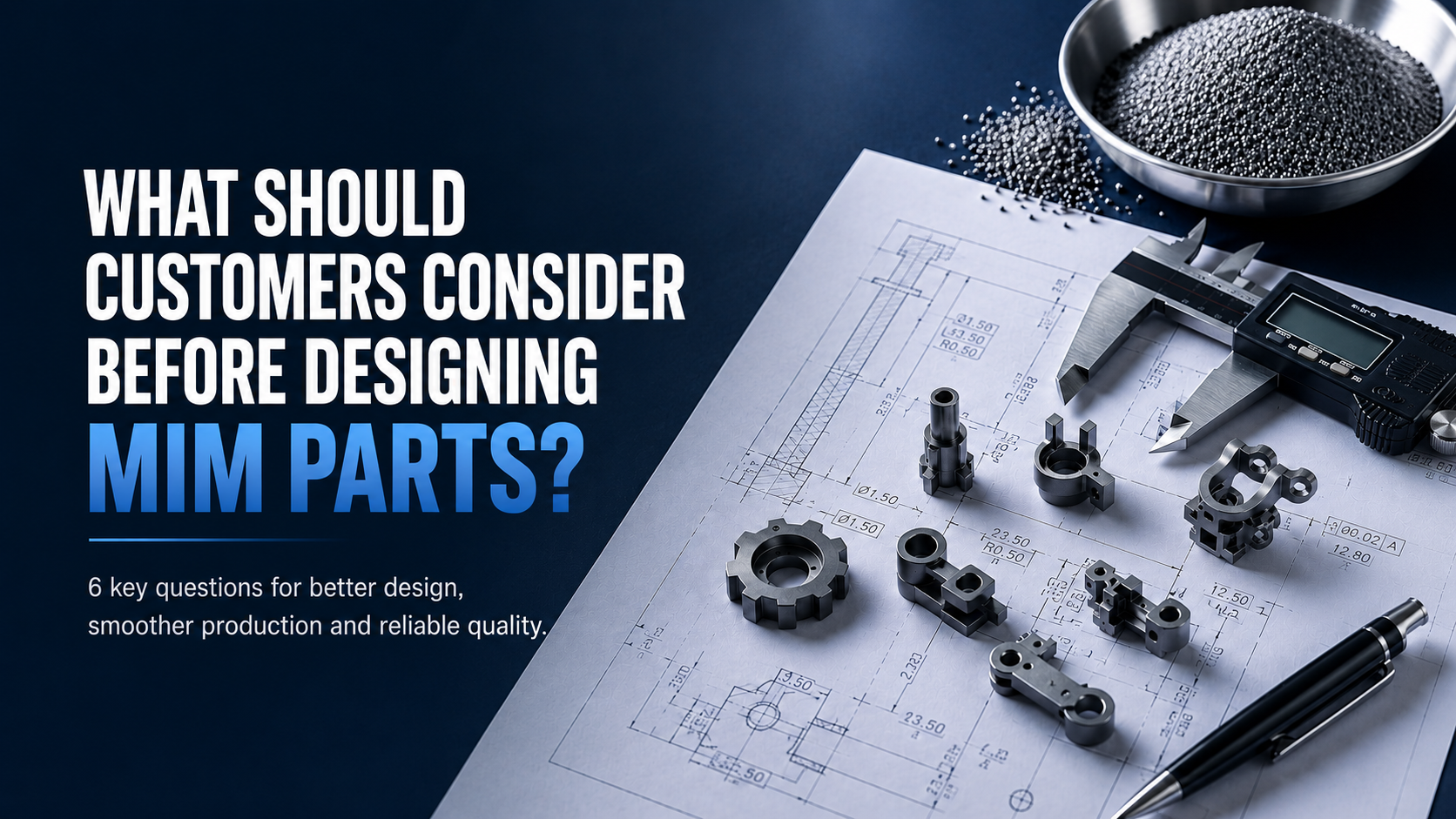
Before designing a MIM part, customers should consider a few key questions.
1. Is this part truly suitable for MIM?
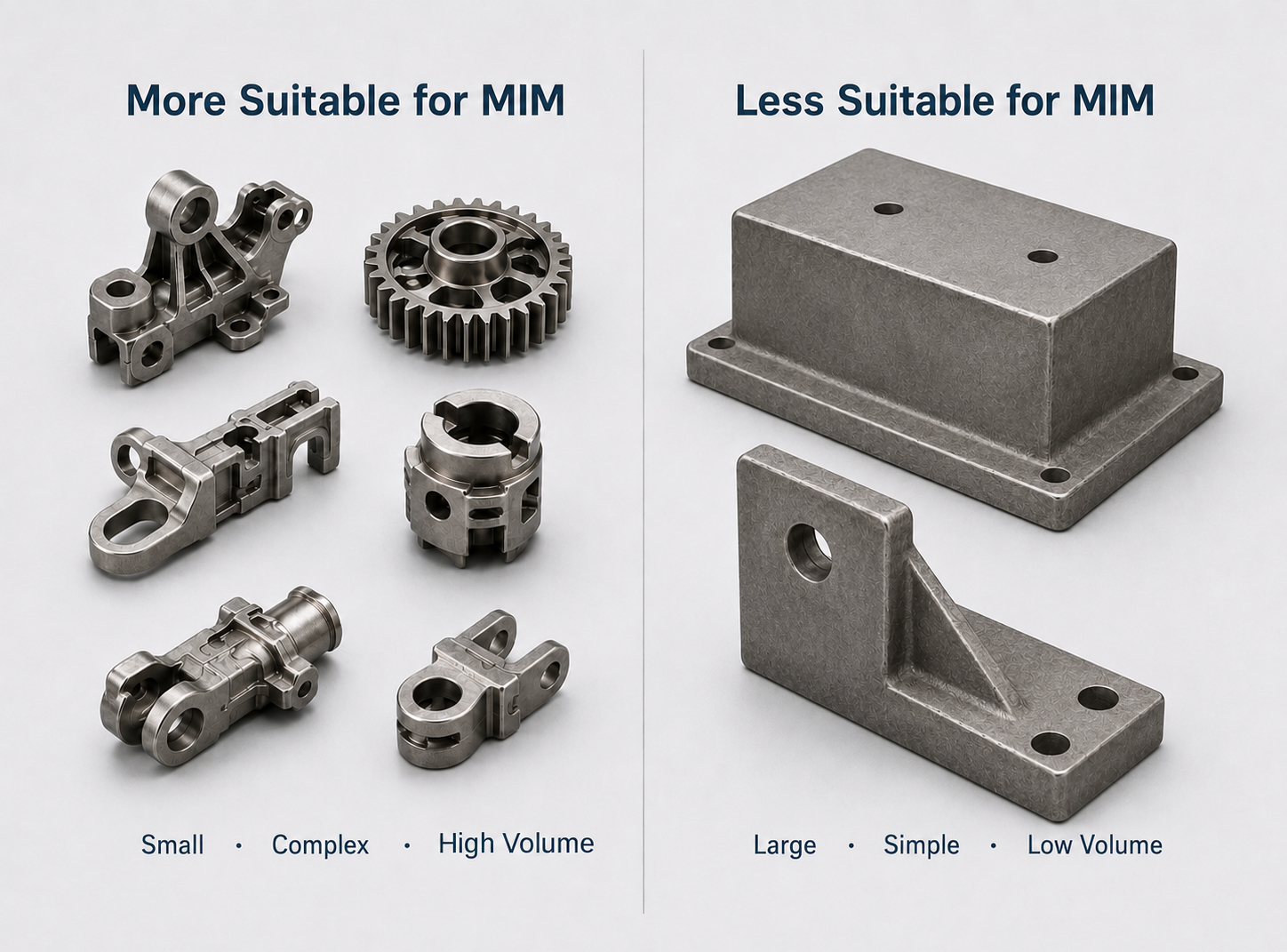
Metal Injection Molding is especially suitable for small, complex metal components that require repeatability at scale.
If a part has complex geometry, fine features, internal structures, or clear volume demand, MIM may offer strong advantages.
But if the part is very large, very simple, or only needed in small quantities, CNC machining or another process may be more suitable.
The first question is not only:
“Can MIM make this part?”
It is:
“Is MIM the right process for this part?”
- What function does the part need to perform?
A metal component is never just a shape.
It may need to carry load, resist wear, connect with other parts, provide locking performance, support movement, or deliver a specific visual appearance.
Different functions require different material choices, tolerance priorities, surface finishes and inspection methods. A structural part, a wear-resistant part and a visible cosmetic part should not be designed in exactly the same way.
The earlier the real function is understood, the better the engineering team can balance performance, cost and manufacturability.
3. Is the geometry suitable for MIM?
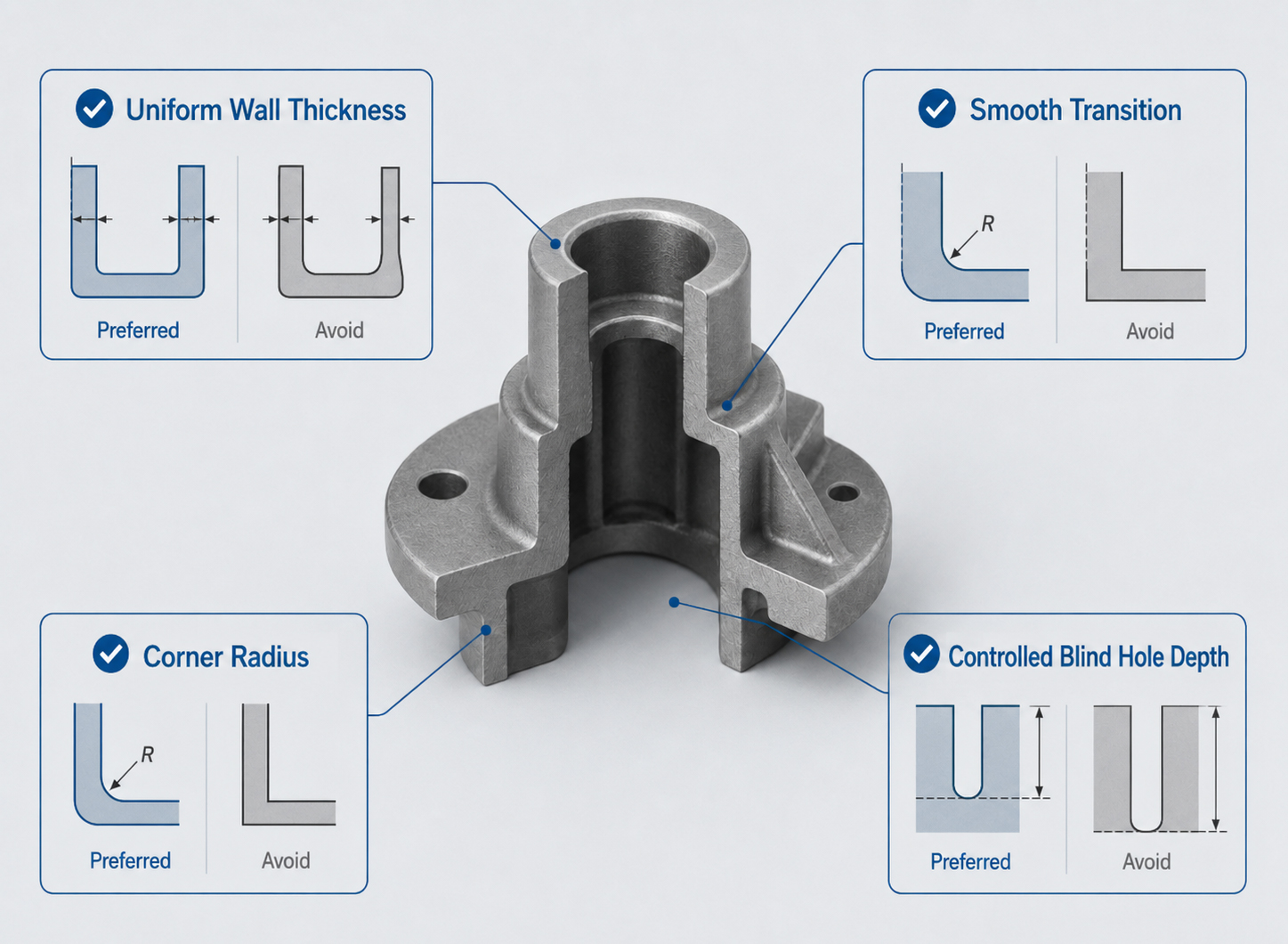
For MIM parts, geometry directly affects moldability, demolding, shrinkage control, sintering stability and final consistency.
Wall thickness, thick sections, sharp corners, deep holes, thin features, complex transitions and local fine details should all be reviewed early.
Some structures may look reasonable in a 3D model, but can still create challenges in filling, deformation, sintering shrinkage or dimensional stability during MIM production.
A good MIM design is not only about making the part look manufacturable.
It is about making the part stable in repeatable production.
4. Which dimensions are truly critical?
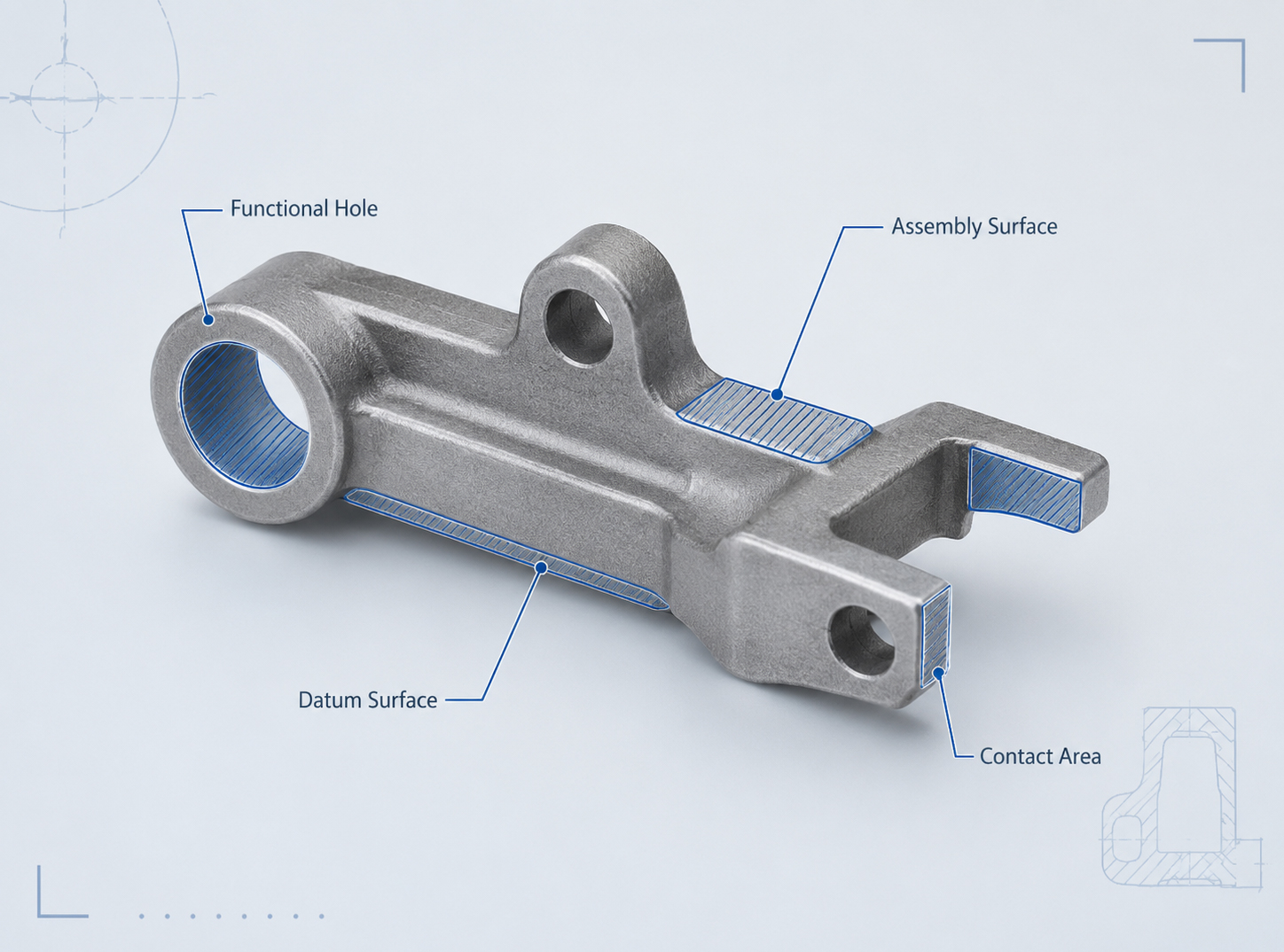
Not every dimension needs to be controlled with the same level of precision.
In many projects, the most critical dimensions are assembly surfaces, functional holes, locking areas, contact points, or positions that directly affect movement and performance.
If every dimension is specified with very tight tolerance, the project may become more complex and more expensive than necessary.
But if the truly critical dimensions are not clearly identified, the final part may fail to meet its functional requirements.
At the design stage, it is important to define which dimensions must be tightly controlled, and which areas can allow reasonable process flexibility.
- Have material and surface finishing been considered early enough?
Material selection should not be left until the end.
Stainless steel, low alloy steel, tool steel, soft magnetic materials, titanium alloys and other MIM materials have different strengths, corrosion resistance, hardness, magnetic properties and cost structures.
Material selection affects not only part performance, but also shrinkage, sintering behavior, post-processing and final cost.
Surface finishing and post-processing should also be considered early. Deburring, cleaning, polishing, passivation, plating, PVD coating, DLC coating, bead blasting and laser marking can all influence appearance, corrosion resistance, wear resistance, traceability and dimensional control.
If these requirements are raised too late, they may create additional challenges in geometry, tolerance, surface uniformity and cost.
- Does the project have a clear production expectation?
MIM usually shows greater value when the project has clear volume demand or a long-term production plan.
Tooling investment, process development and validation make more sense when there is stable production demand beyond a small prototype batch.
Before choosing MIM, customers should consider not only the first order quantity, but also the future production plan.
A successful MIM project is not only about making a part.
It is about making the part stable, repeatable and scalable.
At Yibi Precision, we support customers with early-stage MIM DFM review and engineering evaluation, helping identify potential risks in material selection, geometry, tolerances, surface finishing and production feasibility before tooling begins.
Because in precision manufacturing, many outcomes are decided before the first mold is built.