
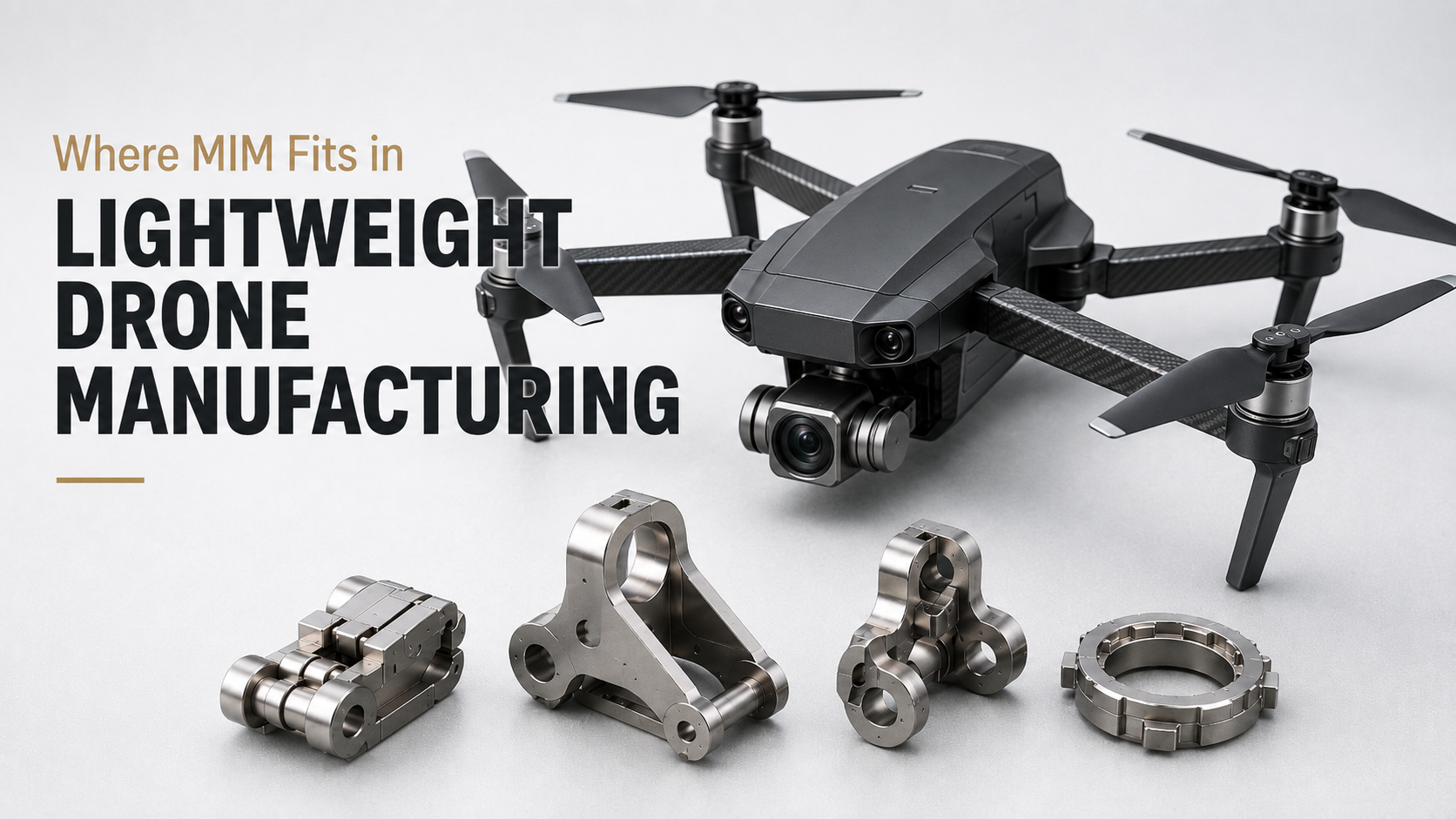
 Drone design is strongly shaped by lightweight requirements.
Every gram can affect flight time, energy efficiency, payload capacity, and flight stability. That is why many drone structures rely on carbon fiber, aluminum, plastics, and composite materials.
But lightweight design does not mean every component should be reduced to the lightest possible material.
In some areas of a drone, reliability depends on a different set of requirements:
strength,
wear resistance,
dimensional stability,
secure locking,
accurate positioning,
and repeatable mechanical performance.
These requirements often appear in small mechanical points that are less visible to the end user, but critical to the overall system.
The hidden mechanical points inside a drone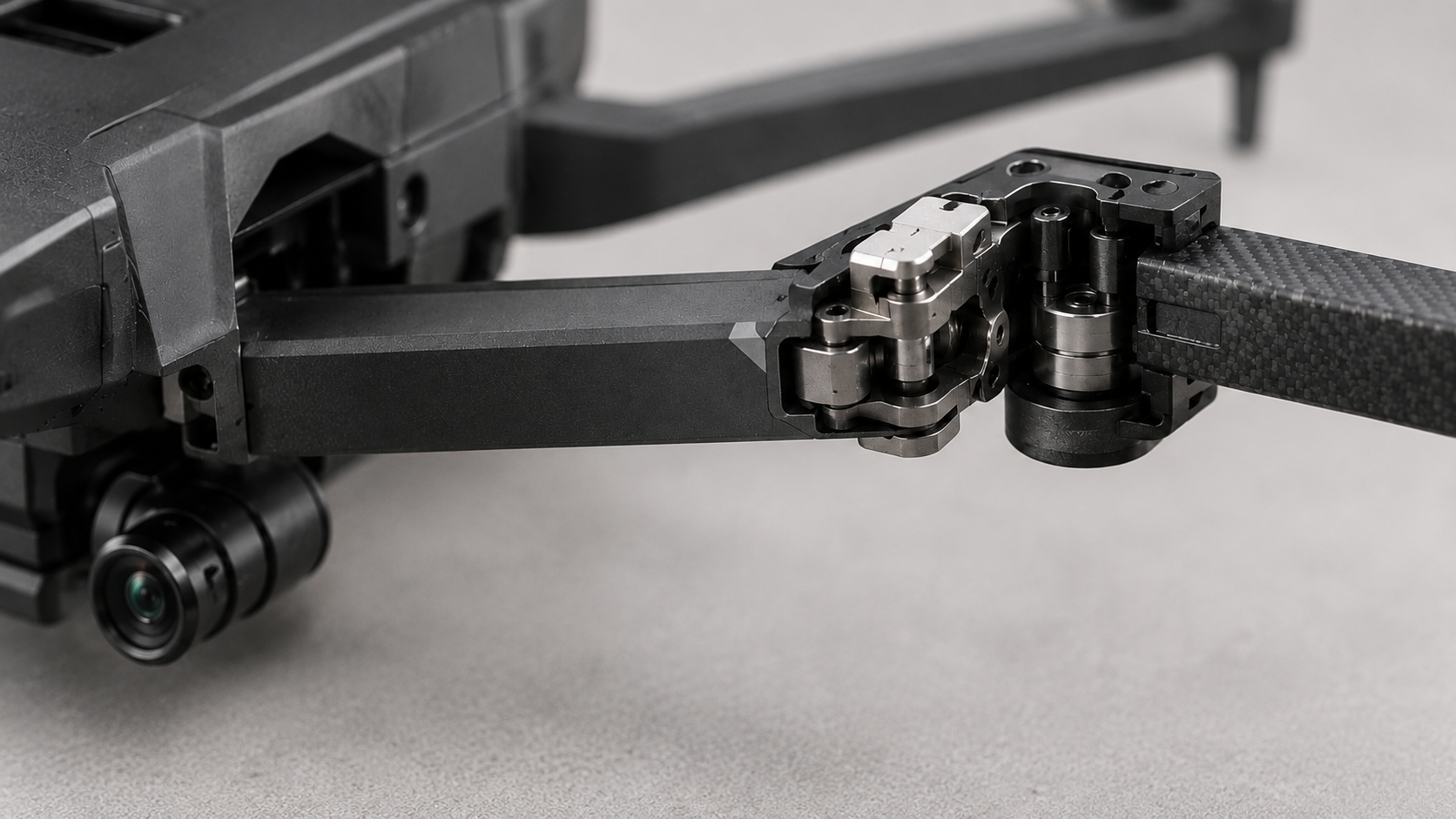
The most visible parts of a drone are usually the frame, propellers, camera, battery, or sensors.
But many reliability risks are hidden in smaller mechanical areas:
gimbal movement,
folding arm joints,
locking mechanisms,
payload mounting points,
sensor brackets,
small shafts, pins, gears, and structural inserts.
A folding arm needs to open, position, and lock smoothly again and again.
A camera gimbal needs stable movement and precise alignment.
A payload mount needs to hold equipment securely without adding unnecessary bulk.
These parts may be small, but they often sit where movement, load, vibration, and alignment come together.
In these areas, material choice and manufacturing consistency can directly affect product reliability.
Where MIM becomes relevant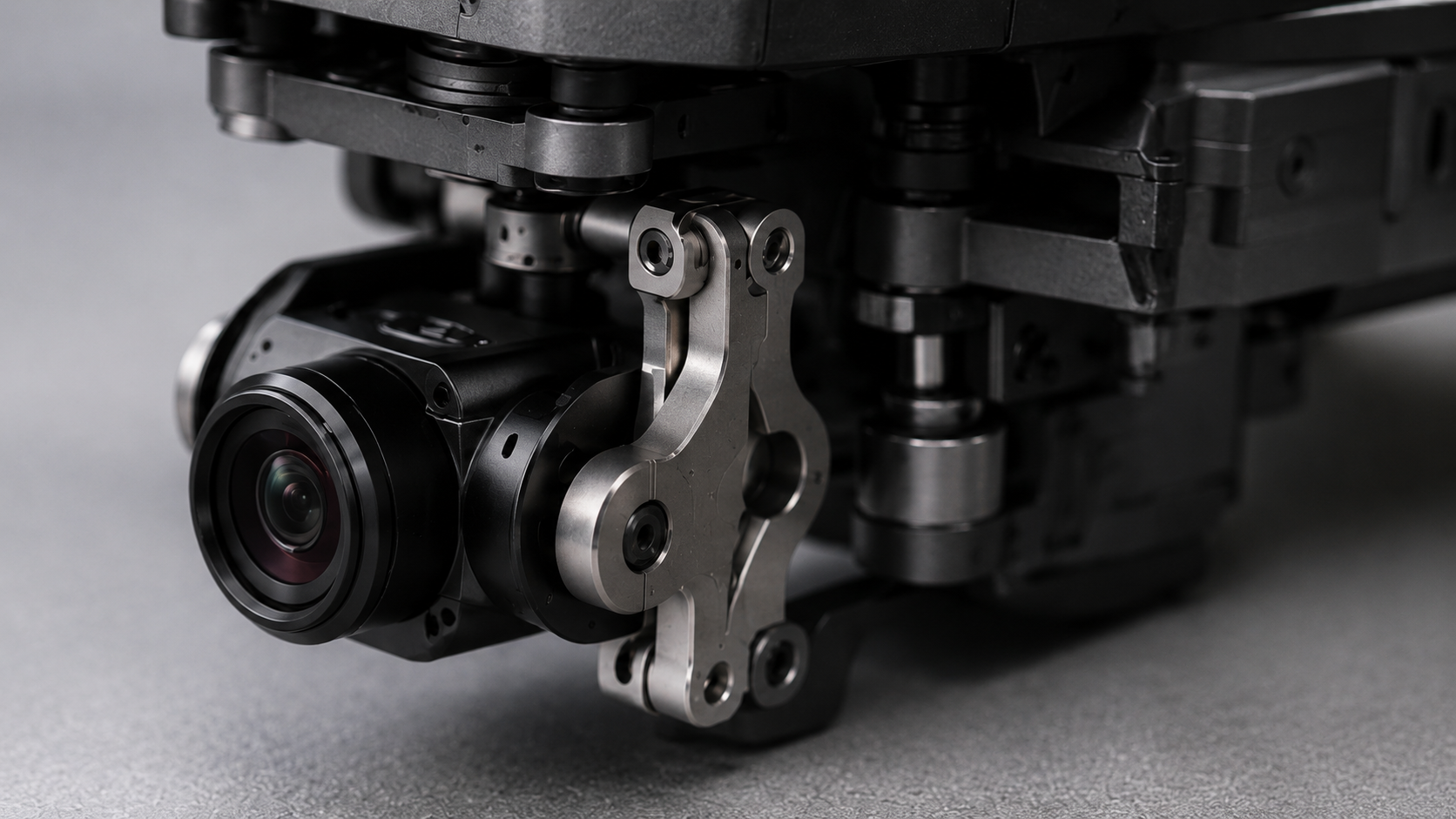
Metal Injection Molding, or MIM, is not a process for making an entire drone.
It is usually not the right solution for propellers, large frames, long arms, batteries, or electronic systems.
Its value appears in a more focused area:
small metal components used in movement, locking, mounting, positioning, and structural connection points.
For drone and UAV assemblies, this may include gimbal brackets, folding hinge parts, locking components, micro gears, shafts, pins, sensor brackets, payload mounting parts, and compact structural inserts.
These components are not the largest or most visible parts of a drone.
But they can have a direct impact on assembly reliability and long-term mechanical performance.
When MIM becomes the better option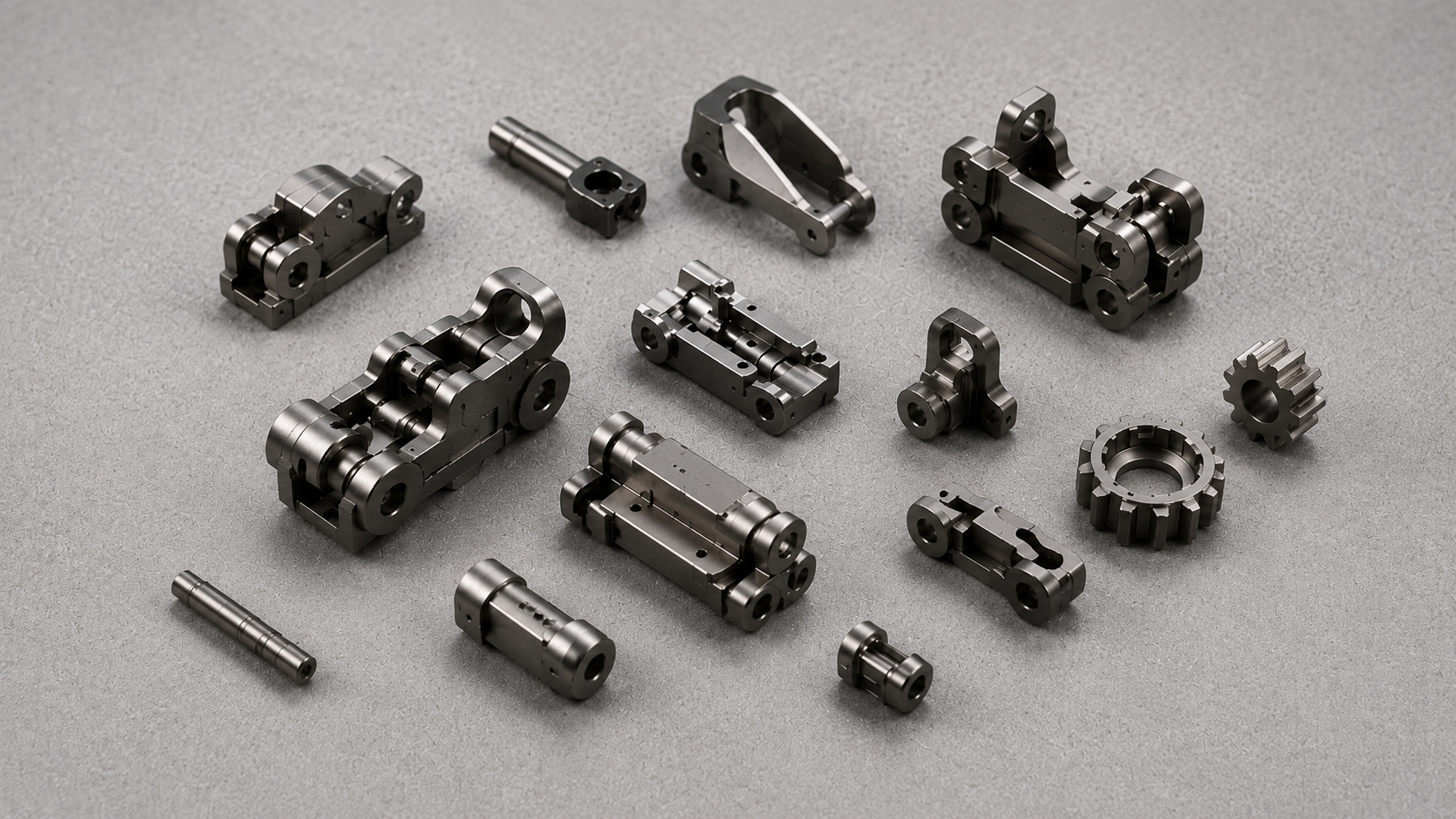
Small size alone does not justify MIM.
MIM becomes more relevant when a component combines several requirements:
complex geometry,
metal performance,
repeatable production,
and the potential for functional integration.
Compared with machining every feature from solid metal, MIM can be more suitable when a component includes fine details, curved surfaces, holes, undercuts, thin sections, or integrated functional structures.
For example, a compact locking component may need to combine positioning, guiding, and structural support within one small part.
In this case, MIM can help turn a complex small metal component into a more scalable production solution.
That is why MIM should be considered not only as a manufacturing method, but as part of the component design strategy when strength, geometry, and repeatable production all matter.
Precision where lightweight design still needs strength
As drones move further into industrial inspection, agriculture, logistics, public safety, mapping, and commercial monitoring, their mechanical requirements will continue to rise.
These applications often demand longer use cycles, more stable payload systems, more reliable movement structures, and stronger environmental resistance.
In this context, precision metal parts will continue to have a place inside drone assemblies.
They are not needed everywhere.
They are usually not found in the largest or most visible structures.
Their value appears in the small mechanical points where strength, alignment, movement, and repeatability matter.
For suitable components, MIM can help turn these hidden parts into stable, scalable, and production-ready solutions.
Because in drone manufacturing, lightweight design is essential.
But reliability is often decided at the points where the smallest parts carry the greatest mechanical responsibility.